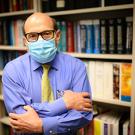
40 years of treating infectious disease gives Stuart Cohen full perspective on coronavirus
(SACRAMENTO) — Near the end of a virtual COVID-19-themed town hall for the UC Davis Health community in April, David Lubarsky, CEO of the health system, brought out a special gift for a unique man.
The National Institutes of Health has awarded a grant of $1.2 million to the Mouse Biology Program at the University of California, Davis, to create mice that are susceptible to the COVID-19 virus, and to distribute them to researchers.
The goal is to create mice that can be used to reproduce human COVID-19 disease, said Kent Lloyd, director of the Mouse Biology Program and professor in the Department of Surgery at the UC Davis School of Medicine.
Poorer Communities Face Double Burden During Pandemic as They Stay Home Less
Wealthier communities went from being the most mobile before the COVID-19 pandemic to the least mobile, while poorer areas have gone from the least mobile to the most mobile, according to a study by the University of California, Davis.
(SACRAMENTO) — Summer days of high heat and poor air quality can be extremely challenging for those with COPD, asthma, pulmonary fibrosis and other lung conditions. Combined with the COVID-19 pandemic and the increased likelihood of fires, extra precautions are necessary.
"It's more important than ever before to monitor the safety of your outdoor activity," said Aimee Kizziar, a respiratory therapist and pulmonary rehabilitation program supervisor at UC Davis Health.
Mapping microbes and viruses can prepare us to better fight the next COVID-19
(SACRAMENTO) — In this age of COVID-19, Jonathan Eisen says what we really need is a field guide to coronaviruses. We’ll need it when the next new dangerous virus appears, and we are not close.
Thousands of Large Animals Spared Under Shelter in Place, Finds Report on Three States
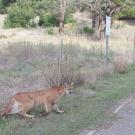
Fewer wild animals, including threatened mountain lions, are becoming roadkill during shelter-in-place orders, finds a study on three states from the University of California, Davis.
Using traffic and collision data collected from California, Idaho and Maine, the researchers found that wildlife-vehicle conflict has declined by 21-56 percent from early March to mid-April, following government stay-at-home orders.
Two researchers at the University of California, Davis, are adapting their technology for amyloid-based, self-organizing protein scaffolds to combat coronavirus. They hope the technique could be used in diagnostic tests or for virus-neutralizing masks and other protective equipment.
This is the message from leadership that appeared in today’s edition of Friday Update at UC Davis Health.
Dear Colleagues,
The COVID-19 pandemic shows that it’s never been more important to collaborate across the causeway. UC Davis and UC Davis Health are doing just that, and the impact is felt both in the Sacramento region and far beyond.
BIOSCAN, Earth BioGenome Project and Global Virome Project Propose Pandemic Interception System
Three major initiatives in biodiversity genomics — BIOSCAN, the Earth BioGenome Project and the Global Virome Project — have joined forces to deliver a “pandemic interception system” based upon comprehensive knowledge of pathogens and their hosts, explains a recent commentary in the Proceedings of the National Academy of Sciences.
Projects focus on effects of the pandemic on families and patient care
(SACRAMENTO) — The Center for Healthcare Policy and Research, Center for Health and Technology and Behavioral Health Center of Excellence at UC Davis have collaborated to provide $90,000 for a range of research on the impact of COVID-19.
The funding will go to five projects that explore the effects of the pandemic on mental health, breast cancer screening, NICU care, children with disabilities and post-surgery therapy.
UC Davis researchers have a role in nine of the 25 COVID-19-related projects that recently received seed grants averaging about $50,000 from CITRIS and the Banatao Institute, a systemwide UC initiative headquartered at Berkeley.
Here are the projects with UC Davis researchers, 17 in all, listed with colleagues from other campuses. The projects are divided by award category.
(SACRAMENTO) — Summer is coming and COVID-19 restrictions are easing. That means people are changing what they do both indoors and outdoors, raising new questions about staying safe.
Two UC Davis infectious disease experts explained what is changing. Both had the same strong warning.
Testing everyone in all locations every day for SARS-CoV-2 is impractical, if not impossible.
Instead, administering “accurate, complete and rapid” tests to strictly defined groups is the best path forward through the COVID-19 pandemic, write David Lubarsky, vice chancellor of human health sciences and UC Davis Health CEO; and Brad Pollock, chair of the department of public health sciences and associate dean of public health sciences at UC Davis School of Medicine.
UC Davis continues its public outreach on the coronavirus and the COVID-19 pandemic with two livestreamed programs the first week of June, featuring experts from the university and around the country discussing the progress being made in testing for and vaccinating against the disease.
The first program, focusing primarily on vaccines, is scheduled for Wednesday (June 3), as the third symposium in a public awareness series organized by Distinguished Professor Walter Leal of the Department of Molecular and Cellular Biology.
(SACRAMENTO) — COVID-19 research and clinical trials throughout UC Davis have a quiet and crucial backbone that is hard to describe – even for the directors of this center providing the support.